Packaging and Packaging Waste Regulation (PPWR) – what does it mean for the packaging industry?
The Packaging and Packaging Waste Regulation, known as PPWR, is one of the most significant regulatory reforms affecting the packaging sector in the EU in a long time. It is a broad framework that influences how packaging is designed, manufactured, used and documented throughout its entire life cycle.
PPWR will replace the current Packaging and Packaging Waste Directive. This is a major change in itself, as a regulation applies directly in all EU Member States without national transposition. The regulation covers all packaging placed on the EU market and the management of packaging waste.
The main objectives of PPWR are to reduce packaging waste, improve recyclability and promote reuse. Behind the regulation is a clear ambition to address littering and to ensure that packaging waste is directed more effectively into circular systems instead of ending up as an environmental burden.
The regulation entered into force in February 2025 and will start to apply from 12 August 2026 onwards, in phases. Certain obligations are subject to transitional periods. A key long-term goal is that by 2030, all packaging placed on the EU market must be recyclable or reusable. Although some transition periods are relatively long, the regulation already guides packaging design today. This is challenging, as many details are still being clarified. In December 2025, the European Commission proposed possible clarifications and simplifications to PPWR, which adds some uncertainty to the final application of the regulation, even though the overall timeline continues to move forward.
Design for Recycling – packaging design with recyclability at the core
One of the key themes of PPWR is recyclability and the principle known as Design for Recycling. In practice, this means that packaging must increasingly be designed with recyclability as a starting point. The EU aims to improve the circularity of plastic packaging, which is why the regulation emphasizes solutions that support efficient collection, sorting and recycling.
In addition to recyclability, the regulation introduces gradually tightening targets, especially for plastic packaging and the use of recycled materials. These targets progress step by step into the 2030s and beyond, steering packaging solutions towards longer-term planning and development.
As part of this overall approach, PPWR also aims to reduce the amount of packaging waste by 5% by 2030, 10% by 2035 and 15% by 2040. To achieve these targets, the regulation sets out several measures, including packaging minimisation requirements and bans on certain packaging formats.
Since all packaging placed on the EU market must be recyclable by 2030, the European Commission is required to issue supplementary regulation on Design for Recycling by 1 January 2028 at the latest. This guidance will clarify, among other things, how recyclability is assessed in practice for different types of packaging.
Packaging labelling and reuse
For consumers, the most visible change under PPWR is likely to be harmonised recycling and sorting labels. The goal is that the same labels function in the same way across all EU countries, both on packaging and on waste collection bins. The development of these labels is led by the EU’s Joint Research Centre (JRC), and their introduction is mainly scheduled for 2028.
According to the JRC’s proposal, labels would be based on packaging material and presented using pictograms and color codes, with minimal text and accessibility considered. The aim is to make sorting easier for consumers and to reduce confusion, helping packaging to be recycled more effectively. From a packaging design perspective, however, the change is not without challenges, as color coding and visual requirements may increase costs and limit packaging aesthetics.
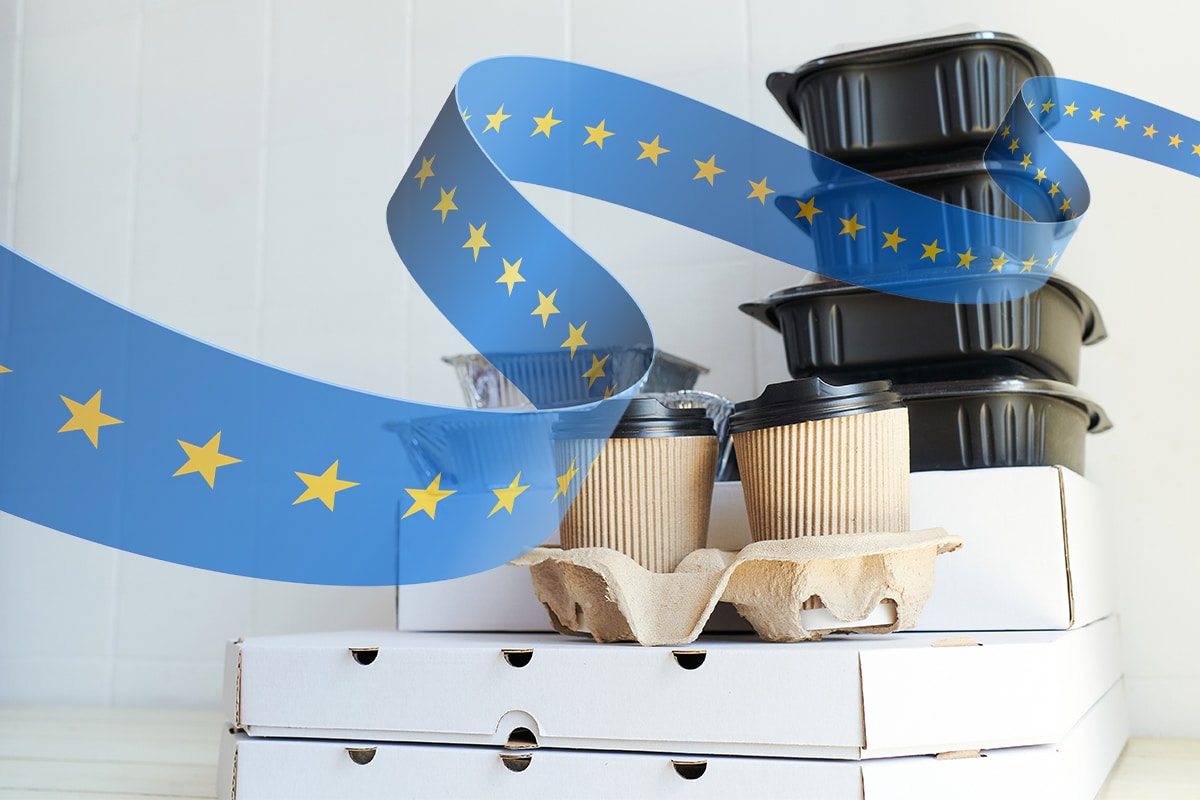
Reuse of packaging is another change that will be visible to consumers. PPWR introduces obligations to reuse, particularly for operators that sell beverages and takeaway food directly to consumers, such as retailers, cafés and restaurants. From 2030 onwards, consumers must be able to purchase takeaway beverages in their own containers. In addition, operators will later be required to offer beverages in reusable packaging.
In Finland, this has sparked discussion, as the country has an exceptionally well-functioning deposit and return system with a very high return rate for beverage packaging. PET from beverage bottles is already efficiently recycled into new raw material. Reuse obligations could change this balance and would require new systems for washing logistics and responsibility sharing. This is one of the areas of PPWR where final solutions and possible exemptions are still being defined.
Looking ahead
PPWR is, above all, a long-term transformation. It changes the way packaging is viewed and developed across the EU. For packaging industry actors, this means greater anticipation, closer cooperation and increased transparency throughout the entire value chain.
While the practical implementation of the regulation is still evolving, the overall direction is already clear. PPWR is steering the packaging sector towards more harmonised practices and long-term planning, where future requirements must be considered well in advance.